Your treatment, explained with care
Published Updated
Not a doctor's language — yours. Here you'll find the questions patients and families actually ask, answered in plain words first, from the day of diagnosis to years afterward. When you need the exact medical term — for another doctor, or for insurance — it's there too, just underneath.
For the full clinical detail on your specific diagnosis, the pages under Gynaecological Cancers are the place to go. Think of this guide as sitting alongside those — organised by what you're going through, not by which cancer you have. For symptoms, screening, and choosing a specialist — before any of this applies — see the Blog.
Where are you in the treatment journey?
A gynaecological cancer treatment plan is built around three things: the type of cancer, how far it has spread (its stage), and your own health and priorities. Most journeys move through five stages — understanding the diagnosis, preparing, treatment, recovery and long-term follow-up — and each has its own guide below.
Your questions change as treatment moves forward. Pick whichever part matches where you are today.
Understanding a Cancer Diagnosis
What a diagnosis actually means, how staging and biopsy results get explained, and what happens right after "it's cancer" — before any treatment decisions.
Before Treatment
Once the diagnosis is clear — what your treatment options are, and how to get ready before treatment begins.
During Treatment
What to expect from surgery, chemotherapy or radiation — day by day.
Recovery
What's normal, what's worth calling about, and when life starts feeling ordinary again.
Life After
Fertility, follow-up, and the questions that only come up months or years later.
Related reading
How is a treatment plan decided?
No two plans are identical. Your team looks at the type of cancer, its stage and grade, your overall health, and whether keeping the ability to have children matters to you. Those findings are usually reviewed together by surgeons, oncologists, pathologists and radiologists, often called a multidisciplinary team or tumour board, so that the recommendation does not rest on one opinion.
The plan is a recommendation, not an order. You are entitled to ask why each step is advised, what the alternatives are, and what each choice means for recovery and daily life. The Before Treatment guide walks through those questions in detail, and Understanding a Cancer Diagnosis explains the reports that feed into the plan.
Key terms, in plain language
These are the words you are most likely to hear in clinic and see on reports. Each has a short definition, and the journey guides explain them further.
- Biopsy
- A small sample of tissue taken from the suspicious area and examined under a microscope. It is the test that confirms whether cancer is present and what type it is.
- Staging
- A description of how large the cancer is and whether it has spread to lymph nodes or other organs. The stage guides which treatments are suitable.[1]
- Tumour grade
- How abnormal the cancer cells look under the microscope. Higher-grade cells tend to grow and spread faster. Grade is different from stage, and both matter for planning.
- Gynaecological oncologist
- A doctor trained in both gynaecology and cancer surgery who treats cancers of the female reproductive organs and works with medical and radiation oncologists.
- Multidisciplinary team (tumour board)
- A meeting where surgeons, medical and radiation oncologists, pathologists and radiologists review a case together and agree on a recommended plan.
- Hysterectomy
- Surgery to remove the uterus.[9] In cancer care it may be “simple” (uterus only) or “radical”, which also removes surrounding tissue.
- Lymph node assessment
- Checking whether cancer has reached the lymph nodes, either by removing a group of nodes (lymphadenectomy) or by testing only the first node that drains the tumour (sentinel node biopsy).
- Keyhole (laparoscopic) and robotic surgery
- Operations done through several small cuts using a camera and long instruments, which the surgeon may control from a robotic console.
- Chemotherapy
- Medicines that kill or slow cancer cells, given into a vein or as tablets, usually in cycles with rest periods in between.
- Radiotherapy
- Treatment with high-energy radiation, either from a machine outside the body (external beam) or placed inside the body next to the tumour (brachytherapy).
- Neoadjuvant and adjuvant treatment
- Treatment given before (neoadjuvant) or after (adjuvant) the main treatment, usually surgery, to shrink the cancer or to lower the chance that it returns.
- Fertility-sparing treatment
- Approaches that aim to keep the ability to have a child, such as leaving the uterus or an ovary in place, or freezing eggs, embryos or ovarian tissue before treatment.[6]
- Lymphoedema
- Long-lasting swelling from a build-up of lymph fluid, most often in a leg, after lymph nodes are removed or treated with radiation.[8]
- Remission
- Signs of cancer have reduced or disappeared on tests. Doctors are careful about the word “cured”, which is why follow-up continues after remission.
- Surveillance (follow-up)
- Planned check-ups after treatment to find any return of cancer early and to manage side effects.
- Palliative (supportive) care
- Specialist care that focuses on easing symptoms and improving comfort and quality of life. It can be given alongside treatment at any stage, not only at the end of life.
Questions patients and families ask most
Short answers to the questions that come up across every stage. They are general information, not advice for one person; your own team’s instructions always come first.
What is the difference between a diagnosis and staging?
A diagnosis answers “what is this?” — it usually comes from a biopsy, where a small sample of tissue is examined under a microscope. Staging answers “how far has it spread?” — it combines examination, scans and sometimes surgery to describe the size of the cancer and whether it has reached lymph nodes or other organs. Staging is what lets your team compare options and discuss outlook in a consistent way.[1]
Do all gynaecological cancers need surgery?
Not always, but surgery is central for many. For endometrial (uterine) cancer it is the most common treatment, and most women with ovarian cancer have an operation to remove as much tumour as possible. Cervical cancer can be treated with surgery or with radiation, often combined with chemotherapy, depending on the stage. What is right for you depends on the type of cancer, its stage and your general health.[2][3][4]
Will I need chemotherapy or radiation as well as surgery?
Sometimes. Chemotherapy often follows surgery for ovarian cancer, and radiation or chemotherapy may be added after an operation if the pathology report shows a higher chance of the cancer returning. In other cases surgery alone is enough. These decisions are usually made by a team that includes a surgeon, a medical oncologist and a radiation oncologist, and you can ask to hear the reasoning behind each recommendation.[3]
Is keyhole or robotic surgery always the better option?
Not always. For many cancers, keyhole and robotic surgery mean smaller cuts, less pain and a quicker return to normal life. Cervical cancer is the important exception: in the LACC trial, women with early-stage cervical cancer who had a minimally invasive radical hysterectomy had a higher chance of the cancer returning and poorer survival than those who had open surgery, so open surgery is now generally recommended for that operation. Ask your surgeon which approach suits your diagnosis.[5]
Can I still have children after treatment?
Sometimes. It depends on the cancer and the treatment. Before treatment starts, fertility preservation can include freezing eggs or embryos, freezing ovarian tissue or, before pelvic radiation, moving the ovaries out of the radiation field. In some early-stage cancers a surgeon may be able to leave the uterus or an ovary in place. Raise this at your very first planning conversation, because some options have to happen before treatment begins.[6]
How long does recovery take?
It depends on the operation. For a hysterectomy, MedlinePlus says recovery can take four to six weeks depending on the type of surgery, and keyhole surgery usually shortens it compared with open surgery. Cancer operations that remove more tissue, or that are followed by chemotherapy or radiation, can mean a longer recovery. Your surgeon will give you a realistic timeline for your own operation and tell you which activities to avoid, and for how long.[9]
What is lymphoedema, and can it be prevented?
Lymphoedema (also spelled lymphedema) is long-lasting swelling, most often in a leg after gynaecological cancer treatment. It happens when lymph fluid cannot drain normally after lymph nodes are removed or after radiation. The National Cancer Institute notes that it can appear soon after treatment or years later, and that although it cannot always be prevented, early attention can lower the risk or stop it getting worse. Tell your team promptly about new swelling, heaviness or tightness in a leg or the groin.[8]
Could my cancer be hereditary, and should my family be tested?
A minority of cancers — the National Cancer Institute estimates about 5 to 10 per cent — are linked to inherited gene changes such as those in BRCA1 and BRCA2. Genetic testing is commonly discussed with women who have ovarian cancer, and in some uterine cancers. Genetic counselling before and after a test helps you understand what a result means for you and your relatives. Whether testing makes sense for you is a good question to ask your oncologist.[7]
How often will I need follow-up visits after treatment?
The schedule depends on the cancer type, its stage and the treatment you had, but visits are usually closer together in the first couple of years, often every few months, and are then gradually spaced out. A visit typically includes an examination and a conversation about symptoms; scans or blood tests are added only when they are needed. The National Cancer Institute’s survivorship guidance describes a follow-up care plan as part of care after treatment, so ask for yours before you leave the hospital.[10]
Is it all right to ask for a second opinion?
Yes, and good doctors expect it. A second opinion is routine after a cancer diagnosis, especially before major surgery. Bring your biopsy report, scan reports and, if possible, the pathology slides, and ask your first team to release them. Our blog post on choosing the right hospital explains what to ask.
When should you contact your care team urgently?
During and after treatment, contact your treating team or go to the nearest emergency department without waiting for your next appointment if you notice any of the following:
- A fever (commonly 38 °C / 100.4 °F or higher), especially during chemotherapy, or shivering with chills
- Heavy vaginal bleeding, or bleeding that soaks a pad within an hour
- Severe or worsening pain in the abdomen, pelvis or chest
- Swelling, pain or redness in one leg, or sudden breathlessness
- A wound that is red, hot, leaking or opening
- Vomiting that will not stop, or being unable to pass urine
Your own discharge instructions may list other warning signs specific to your operation or medicines. The Recovery guide explains what is normal and what is worth a call. To speak to the clinic, call +91 62916 81013.
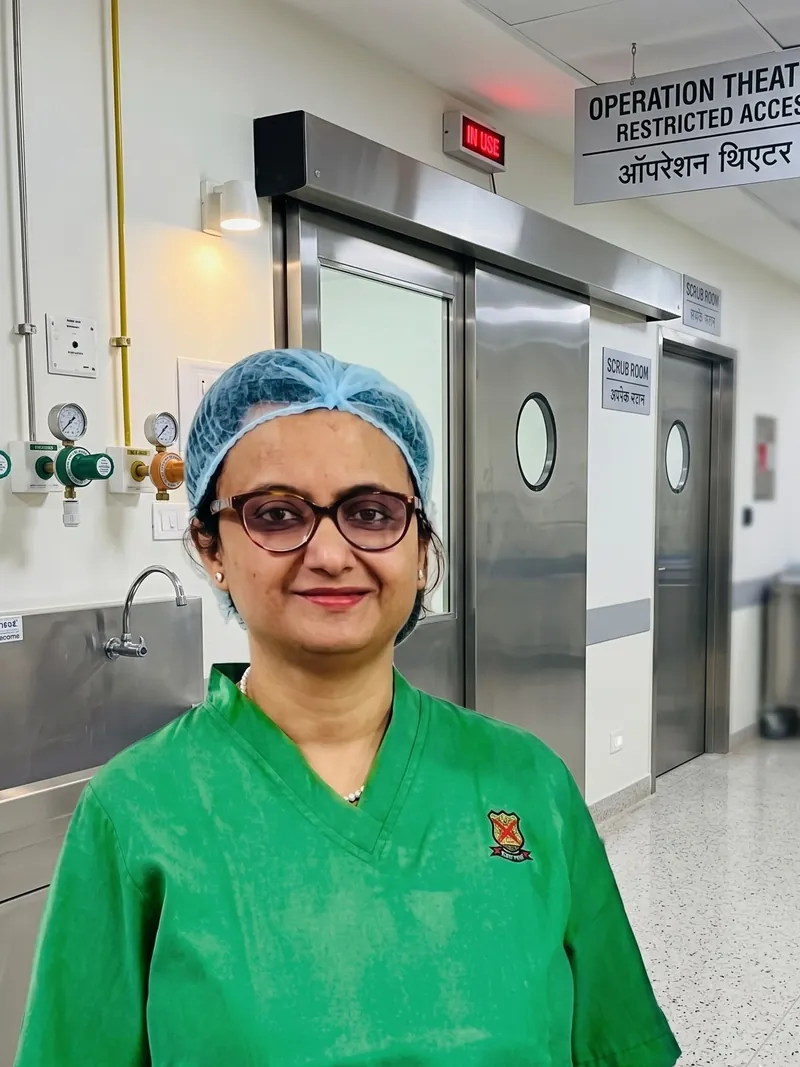
The clinician behind these pages
Every page in this guide is reviewed by Dr. Dipanwita Banerjee — a working surgeon, teacher and researcher in gynaecological oncology.




Sources and further reading
Statements marked with a bracketed number are drawn from the sources below: government health agencies and a peer-reviewed journal.
- National Cancer Institute. Cancer Staging. cancer.gov
- National Cancer Institute. Cervical Cancer Treatment (PDQ®)–Patient Version. cancer.gov
- National Cancer Institute. Treatment of Ovarian Epithelial, Fallopian Tube, and Primary Peritoneal Cancers (PDQ®)–Patient Version. cancer.gov
- National Cancer Institute. Endometrial Cancer Treatment (PDQ®)–Patient Version. cancer.gov
- Ramirez PT, Frumovitz M, Pareja R, et al. Minimally invasive versus abdominal radical hysterectomy for cervical cancer. N Engl J Med. 2018;379(20):1895–1904. PubMed 30380365
- National Cancer Institute. Female Fertility and Cancer Treatment. cancer.gov
- National Cancer Institute. Genetic Testing for Inherited Cancer Risk. cancer.gov
- National Cancer Institute. Lymphedema and Cancer. cancer.gov
- MedlinePlus, U.S. National Library of Medicine. Hysterectomy. medlineplus.gov
- National Cancer Institute. Cancer Survivorship. cancer.gov
This page is general patient information and does not replace advice from your own doctor. Terms and limits of use are on the Terms & Disclaimer page.